
Sometimes, living with IBD, a stoma, or a J-pouch can be difficult to explain to the people around us.
Not because people do not care.
But because some of the challenges are invisible, embarrassing, or simply hard to put into words.
This article is written for the family members, friends, partners, colleagues, and loved ones of people living with chronic digestive conditions. It is not intended to make anyone feel guilty or criticised. Instead, it aims to provide a voice for the person close to you and highlight some of the struggles they may find difficult to talk about themselves.
Every person’s experience is different, but these are ten challenges I have personally found difficult to explain throughout my journey with ulcerative colitis, a stoma, and now a J-pouch.
1. Last-Minute Changes of Plans

One of the hardest realities of living with a chronic illness is that health can change very quickly.
Plans that seemed perfectly achievable on Monday can feel completely impossible by Thursday if symptoms suddenly flare up.
When someone cancels plans or has to scale things back, they are rarely trying to inconvenience anyone. More often, they are disappointed themselves.
Over time, repeatedly cancelling can create feelings of guilt. Eventually, some people stop accepting invitations altogether because they fear letting others down.
A little understanding and flexibility can make a huge difference. Invite people knowing that plans may need to change, and reassure them that it is okay if they cannot make it.
2. Plans Often Need to Be Adapted Around Toilets
For many people with IBD or a J-pouch, access to a toilet is never far from their mind.
Something as simple as including regular restroom stops during a day out can make the difference between someone joining an activity or deciding to stay at home.
Most people do not notice where every toilet is located.
Someone living with digestive disease often does.
Planning with this in mind is a small adjustment that can make someone feel included rather than excluded.
3. Time Before Leaving the House Matters

Many people like to leave the house quickly and get on with the day.
For someone with IBD, a stoma, or a J-pouch, that can be stressful.
Personally, I feel much more comfortable leaving the house once I know my bowel has settled and I have had time to use the bathroom.
Rushing out too early can sometimes mean spending the first part of an outing worrying about finding a toilet instead of enjoying the experience.
If you are planning to leave at 8:30am, suddenly changing that to 7:45am because everyone else is ready may create unnecessary anxiety.
Sometimes that extra time is exactly what someone needs to feel confident enough to leave the house.
4. Eating Out Can Be Challenging
Going out for meals is one of the most common social activities.
Unfortunately, it can also be one of the most stressful.
Many people with digestive conditions carefully manage what they eat and drink. A restaurant that seems perfectly normal to others may have very few safe options available.
When planning a meal out, consider:
- The menu options
- Dietary requirements
- Availability of nearby toilets
- Whether the environment feels comfortable and relaxed
A little thought can transform a stressful experience into an enjoyable one.
5. Some Places May Be Off Limits

That beautiful countryside walk or remote hiking trail might sound fantastic.
For someone who needs reliable bathroom access, it may feel impossible.
Many people living with IBD or a J-pouch subconsciously assess toilet availability wherever they go.
Being somewhere with no facilities for several hours can create significant anxiety.
This does not mean someone does not want to join you.
It simply means they may need activities that offer a little more flexibility and accessibility.
6. Fatigue Is Real
One of the most misunderstood symptoms of chronic illness is fatigue.
Many people with IBD look completely healthy on the outside while feeling exhausted underneath.
The body may be dealing with inflammation, disrupted sleep, medication side effects, or simply the ongoing demands of managing a long-term condition.
It is the result of a body constantly working harder than most people realise.
That tiredness is not laziness.
If someone tells you they are tired, believe them.
7. Anxiety Can Be Part of the Journey

After a severe flare-up, hospital stay, or difficult period of illness, leaving the house can become surprisingly daunting.
Questions begin to appear:
- What if I need the toilet urgently?
- What if symptoms start while I’m out?
- What if I cannot get home quickly?
For many people, these worries are very real.
Providing reassurance, patience, and understanding can help rebuild confidence.
Sometimes simply knowing that the people around them understand their situation is enough to make a difficult day feel manageable.
8. Spontaneity Is Not Always Easy
Many people with IBD rely on routines.
Medication schedules, meal planning, toilet habits, and symptom management all become part of daily life.
Spontaneous plans can sometimes disrupt that routine and create additional stress.
While surprises can be fun, giving someone a little notice often helps them feel more comfortable and more likely to participate.
9. Seating Choices Are Often Practical
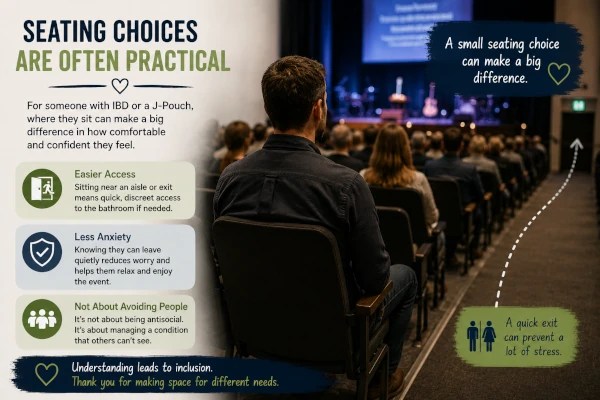
At weddings, theatres, conferences, and other events, some people with IBD prefer to sit near an exit or toward the back of the room.
This is not because they are antisocial.
It is because it provides reassurance that they can leave discreetly if necessary.
Being able to access a toilet quickly without drawing attention can remove a huge amount of anxiety.
Sometimes a simple seating choice is actually a coping strategy.
10. Not Every Symptom Needs Commenting On
Living with a stoma or J-pouch can occasionally involve noises, gurgles, or other unexpected moments.
Most people are already aware when these things happen.
Drawing attention to them can sometimes increase embarrassment rather than reduce it.
Depending on the situation and relationship involved, letting these moments pass without comment can often be the kindest approach.
A Final Thought
One of the hardest parts of living with chronic illness is feeling like you are constantly apologising.
Apologising for cancelling plans.
Apologising for needing the toilet.
Apologising for being tired.
Apologising for things you never chose in the first place.
Often, people living with IBD, a stoma, or a J-pouch are already disappointed when they miss out on activities. They do not need to feel guilty as well.
A little patience, flexibility, and understanding can make a bigger difference than you might realise.
If you know someone living with IBD, a stoma, or a J-pouch, thank you for taking the time to understand their world a little better.
What Would You Add?

If you live with IBD, a stoma, or a J-pouch, what else would you add to this list?
To hear more about my personal experiences living with a J-pouch, explore other videos available here on Pouch Heals.
You can view the video version of this article below: